

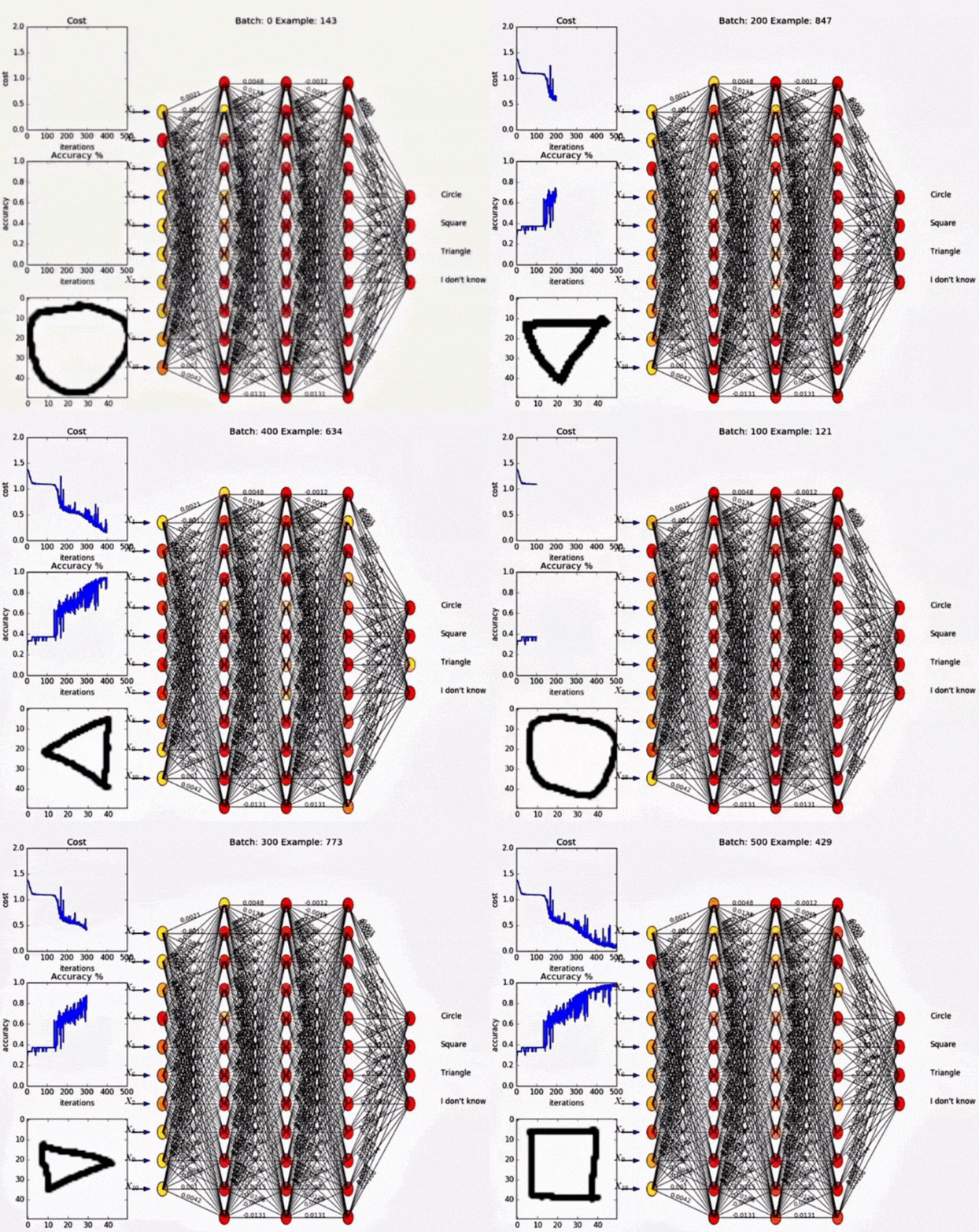
The images reveal, in a visually captivating way, the inner workings of a neural network as it learns to recognize simple shapes, circles, squares, and triangles. On the left, the cost and accuracy graphs tell the story of the model’s progress: the cost gradually drops as errors are corrected, while accuracy climbs, showing the network’s increasing confidence and precision.
At the center, the dense web of interconnected neurons exposes the hidden mechanics of algorithms inspired by the human brain. Each node represents a neuron, and every line is a connection being continuously adjusted as the model learns. In the first image, the generated shape is still blurry and uncertain. By the second image, after hundreds of iterations, the triangle emerges with clarity, a clear reflection of the model’s evolving understanding.
On the right, the possible output classes illustrate the network’s ultimate goal: turning raw, ambiguous pixel patterns into confident predictions. What makes this even more intriguing is that the same logic behind these simple shapes fuels powerful real-world applications, from facial recognition and autonomous driving to medical imaging, industrial automation, and intelligent virtual assistants.
Applications and Practical Value
The type of neural network shown is highly versatile and widely used in modern technology. Its applications include:
- Pattern recognition, such as object detection, handwriting analysis, and real-time image interpretation.
- Healthcare, supporting early detection of tumors and abnormalities in scans.
- Industry, enabling predictive maintenance and monitoring complex systems.
- Security, identifying unusual behavior in videos and enhancing surveillance tools.
- Education and research, offering an intuitive way to understand how AI truly learns.
The Hypnotizing Power of Machine Learning
Watching a neural network learn feels like peeking behind the curtain of artificial intelligence—something that often seems mysterious or even magical. As graphs shift, connections strengthen, and shapes take form, it feels as though we’re witnessing a digital mind developing in real time. This blend of science, curiosity, and futuristic wonder draws readers in effortlessly.
These images take a complex concept and transform it into something dynamic, tangible, and visually intuitive. They evoke a sense of discovery: the viewer sees exactly how a machine improves, adapts, and becomes more accurate. That combination of clarity and fascination keeps the reader engaged, because it’s not just technology on display; it’s evolution unfolding right before their eyes.